

Stop letting 'just in case' run your day, from Center City to a quiet county, we are wherever you are.
You check the stove three times before you leave. Lock the door, unlock it, lock it again. The thought shows up without asking: what if you left something plugged in? So you go back. Just this once, you tell yourself, already knowing that isn’t true. The double-check that used to take a second now eats whole mornings. You know the fear doesn’t hold up to logic. You know checking again won’t actually make you safer. But the anxiety climbs until you give in, and the short relief keeps the whole thing spinning.
What reads as caution to everyone else feels like a cell to you. Coworkers think you’re careful. They don’t see you at the bathroom sink at 2 AM, washing until your hands are raw because the feeling still isn’t right. They don’t know you were late again because you drove back home to photograph the coffee maker. OCD writes rules you never agreed to, then punishes you when you don’t follow them. Each compulsion promises calm and hands back a few seconds of quiet before the next demand lands. You are worn down from arguing with your own mind, and the sharpest part is that you can see the whole pattern and still can’t step out of it.
Getting help in Pennsylvania has its own set of obstacles, and they change depending on where you sit. If you’re in the Philadelphia metro or Pittsburgh, you may be staring down a months-long waitlist. If you’re in a rural county in Northeast PA or out toward Erie, the nearest OCD-informed therapist can be an hour away by car. That gap is real: according to SAMHSA and CDC data from 2022, about 22.8 percent of Pennsylvania adults, roughly 1.83 million people, lived with a mental health condition, and around 15 percent said they couldn’t get the care they needed, most often because of cost or a shortage of providers. When you’re already fighting intrusive thoughts, a long drive or a six-week wait is exactly the kind of friction that keeps people stuck.
OCD therapy helps you step out of the loop. Not by fighting the thoughts harder, which you’ve tried, and not by reasoning your way clear, which hasn’t held. Instead you learn to change your relationship with uncertainty itself, so the thoughts lose their emergency status and the compulsions lose their false promise of control. Working with a therapist who actually understands OCD means you skip the part where you have to explain why you can’t just stop. They already know this has nothing to do with willpower. Through proven, evidence-based methods, you practice responding differently when OCD makes a demand: small steps at first, then larger ones as you build real evidence that nothing terrible happens when you don’t obey.
Sessions happen over secure video from wherever you feel steady in Pennsylvania. A PA-licensed counselor can meet a professional in Center City and a family two hours west with the same video link, which is what makes telehealth work so well across a state that’s really several states in one. No sitting in a waiting room wondering if people can tell what you’re dealing with. No white-knuckle drive while intrusive thoughts ride along. Your therapist meets you in your own space, which is exactly where you need to practice new responses. And because most Pennsylvania insurers, including Independence Blue Cross, Highmark, Aetna, and UPMC Health Plan, cover online behavioral-health sessions at in-network rates, the cost barrier that stops so many people can come off the table.
You don’t have to grind through another day of rituals that never quite satisfy. You don’t have to keep performing fine while OCD sets your schedule. The life where a thought is just a thought and you choose your own actions is closer than it feels right now. Book your free consultation today and meet a PA-licensed counselor who gets it.
Benefits of OCD Therapy in Pennsylvania: Online Therapy That Meets You Where You Are
- Relief from the constant pull of doubt and checking
- Proven approaches like ERP, not just reassurance
- Online sessions you can do from a place that feels safe
- Secure video sessions from home — evening & weekend appointments available
Frequently Asked Questions
Providers accepting referrals
 Cassandra Smith
Hi, my name is Cassie, and I am a Licensed Professional Counselor in Pennsylvania. I have experience working with diverse clients of all age groups. I… View profile
Cassandra Smith
Hi, my name is Cassie, and I am a Licensed Professional Counselor in Pennsylvania. I have experience working with diverse clients of all age groups. I… View profile
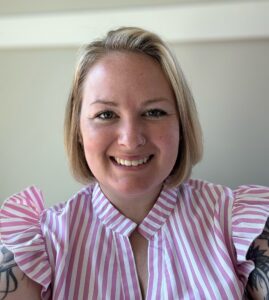 Alexis Haines
Let the healing begin! I have been exposed to many different types of therapy and traumas. Still, I have spent the most time working with sexual… View profile
Alexis Haines
Let the healing begin! I have been exposed to many different types of therapy and traumas. Still, I have spent the most time working with sexual… View profile