
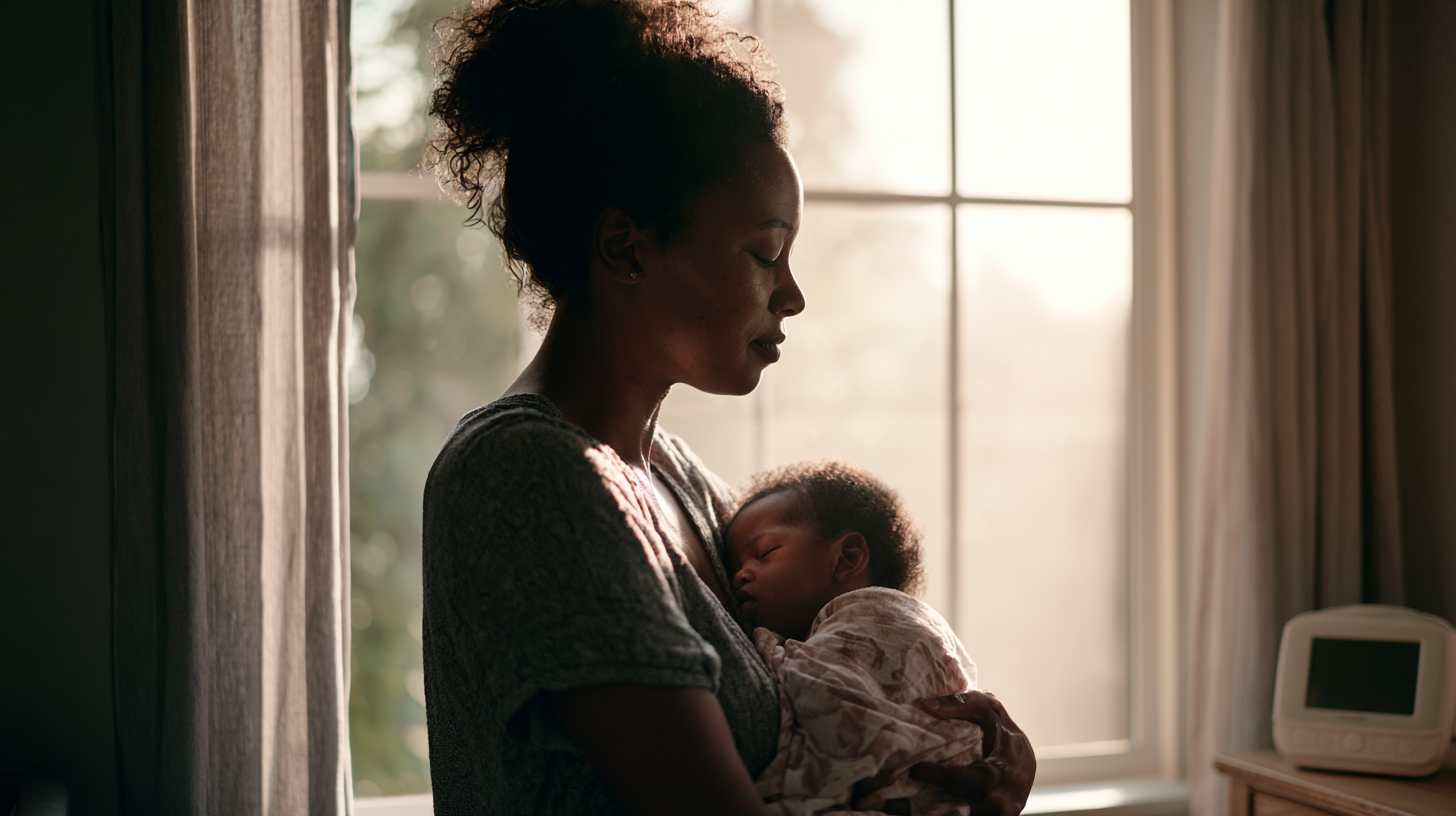
If your mind won't stop scanning for everything that could go wrong, you're not a bad mom — you're carrying more than anyone tells you.
The baby is finally asleep and you’re standing by the crib checking that the little chest is still rising. You already know it is. You check anyway. Then you lie down and your brain starts again, running through every door that could be unlocked, every fever that could spike, every way this small person could come to harm while you blinked.
This is what postpartum anxiety actually feels like. Not a vague worry, but a mind that will not stop scanning for the next threat. You love your baby fiercely. That love and this dread are living in the same chest at the same time, and no one warned you it could be like this.
You are not a bad mom. You are not failing. A nervous system that just went through pregnancy, birth, and the shock of keeping a newborn alive on almost no sleep is doing exactly what it was built to do under that much pressure. It is overprotecting you. The problem is that it forgot how to power down.
You might be googling rare illnesses at 3 a.m. You might hand the baby to your partner and immediately want them back. You might feel your heart race before you’ve even gotten out of bed, bracing for a day you haven’t started yet. Maybe you snap at people you love, then feel sick with guilt about it. None of this means something is wrong with you as a mother.
Online therapy for postpartum anxiety gives you a place to set this down. You work with a licensed clinician who understands what the early months really do to a person, and who won’t flinch when you say the thought out loud that you’ve been too scared to tell anyone. Naming the loop is where it starts to lose its grip. Once you see the pattern you’ve been caught inside, it stops running you from the shadows.
You don’t need years of work for this. Postpartum anxiety responds to support. With the right clinician you learn what your worry is trying to protect, how to interrupt the spiral before it takes the whole night, and how to tell a real concern apart from your brain crying wolf. The relief that comes from finally being understood is not small.
Sessions happen over secure video, from your couch, your nursery, wherever you happen to be. No commute with a newborn in tow. No waiting room full of strangers. You can keep the baby with you, pause to feed, and pick the appointment time that fits the only schedule that matters right now, which is a schedule built around someone very small. We work with moms across New Jersey and Pennsylvania, and getting started is simple.
If part of you has been waiting until things calm down on their own, this is your sign that they don’t have to. You can be heard by someone who gets it, without being judged for any of it. Tell us a little about what you’re carrying, and we’ll match you with a clinician who fits.
Benefits of Online Therapy for Postpartum Anxiety
- Quiet the constant what-if loop
- Therapy that fits around feedings
- Be heard without being judged
- Match with a clinician who gets it
Frequently Asked Questions
Providers accepting referrals
 Jessica Blanding
Let me help you bring healing and understanding to life’s difficulties so you can move past them and into a better mind space. I am experienced… View profile
 Tina Collins
I have over 20 years of experience providing clinical services, including individual, family, and group therapy. My style is warm and conversational. I have worked in… View profile