
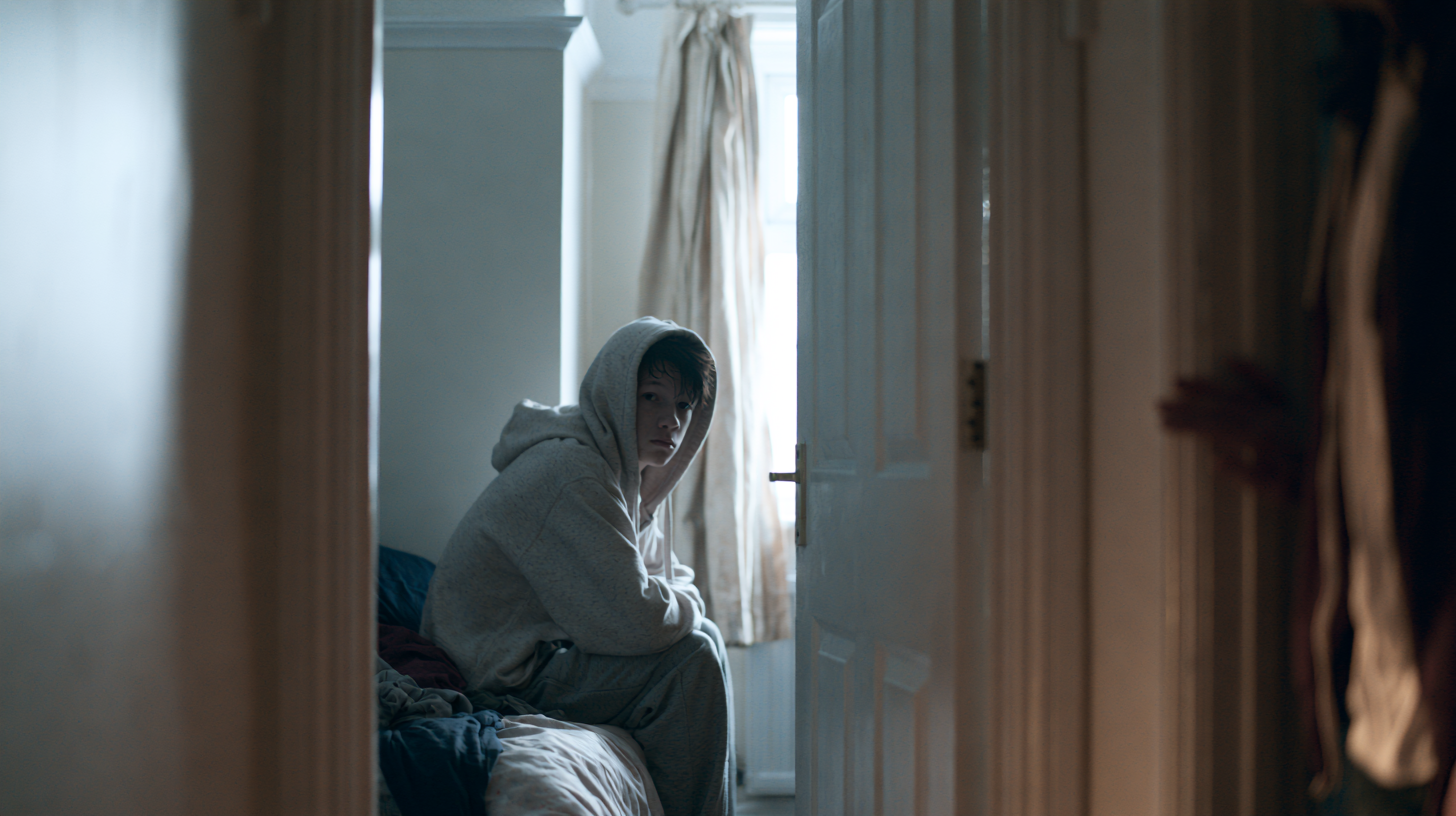
When the shutdown, the flat mood, and the closed door feel like a different kid, a therapist who speaks their language can help you both see what is actually going on.
You knew before they said a word. The kid who used to leave their door open now keeps it shut. The one who talked your ear off at dinner gives you one-word answers and pushes the food around the plate. Something in their face went flat, and you have been quietly watching it for weeks, wondering if you are overreacting or if you waited too long.
You are not overreacting. And you are not too late. If you have landed here looking for teen depression treatment, you have already done the hardest part, which is seeing it before your teen could name it themselves.
Here is the part most parents do not expect. Teenage depression rarely looks like the sad, tearful picture people imagine. More often it shows up as irritability, snapping over nothing, sleeping at odd hours, losing interest in the things they used to love. The withdrawal is the tell. When a kid goes quiet and stays quiet, when the baseline shifts and does not shift back, that is worth taking seriously.
Your teen is not broken. They are not a problem to be managed or a phase to be waited out. They are a young person carrying something heavy who has not yet found the words or the safety to set it down. That is what therapy is for. Not to fix them, but to help them see what is actually going on inside, so it stops running the show from the dark.
What you are seeing is far more common than it used to be. Diagnosed depression among teenagers rose by almost half between 2016 and 2023. That does not make it less real. It means your instinct is right, and it means there is a well-worn path for helping teens through it.
Our teen and adolescent therapy is telehealth, which turns out to matter more for this age than almost any other. Your teen meets with a licensed clinician over secure video, from their own room, on the device they already live on. No fluorescent waiting room. No sitting across from a stranger in a strange office feeling cornered. For a generation that communicates through screens all day, the format is not a barrier. It lowers the wall. Teens who would clam up in a clinic often open up when they are on their own turf, in a space that feels like theirs.
That is the whole idea behind how we match. A teenager can smell it in ten seconds when an adult is talking down to them or reading from a script. We pair your teen with a therapist who actually knows how to reach this age, someone who listens instead of lectures, who lets them lead, who earns the trust rather than demanding it. When your teen feels understood instead of handled, they show up. And when they show up, the work can begin.
The good news buried in all of this: depression in teens responds well to treatment. The trouble is that most teens who are struggling never get any help at all, often because the appointment is too hard to book, the cost is unclear, or the whole thing feels like too much to set in motion. You noticing early is exactly what closes that gap.
Depression help for teens works best when a teen feels safe enough to be honest about what is really happening. That might be the pressure they never talk about, a loss they have not processed, the exhaustion of holding it together at school all day, or a feeling of emptiness they cannot explain. The therapist helps them name it, understand where it comes from, and build real ways to carry it. This is not years of open-ended talking. It is focused, practical work with someone who gets them.
You are probably wondering where you fit in all this. Somewhere between wanting to protect them and not wanting to smother them, between needing to know and knowing they need space. That balance gets sorted out early. Your teen gets a relationship that is genuinely theirs, and you stay looped in as a partner in their care, not shut out and not hovering. Both things can be true.
Let me answer the practical questions directly, because when you are worried you deserve clarity, not a runaround. We are a telehealth practice serving families in New Jersey, Pennsylvania, and Delaware, with licensed clinicians in each of those states. If your plan is one we are in-network with, and the fact that you found this page means it likely is, we will tell you plainly. We verify your teen’s benefits before the first session, so you are not left squinting at a coverage document trying to guess what you will owe. You should not have to decode your own insurance while you are also worried about your kid.
The first session is a consultation. It is a real, billed session, and it is low-pressure by design. Nobody is going to interrogate your teen or hand you a diagnosis in the first hour. It is a conversation about where things are, what you have been noticing, what your teen is willing to share, and whether this therapist feels like the right fit. If the fit is there, the work continues. If it is not, you will know.
You will not be stuck waiting for months either. Once your teen is matched with a therapist, that first consultation can often happen within about 48 hours. We also hold evening and weekend appointments, because a teenager’s schedule and a parent’s schedule rarely leave a lot of room in the middle of the day.
One thing worth saying plainly. If part of what scares you is the thought that your teen might be having darker thoughts, that fear is valid and it is exactly the kind of thing to bring into the open. Their therapist is trained to take safety seriously and to have a clear plan for it. You do not have to carry that watchfulness alone anymore.
If you want to understand more about how we work with this age group, you can read about our teen counseling approach, and if you are weighing whether the whole family could use support, our family therapy may fit too.
You have been watching your kid disappear a little at a time, and you are tired of feeling powerless behind that closed door. The next move is small and it is yours to make. Get your teen matched with a therapist who knows how to reach them, and let someone help you both see what is really going on.
Frequently Asked Questions
Providers accepting referrals
 Alkanease Garrett
I am a Licensed Clinical Social Worker in PA. I have over 20 years of experience in the mental health field, having worked with children, adolescents,… View profile
Alkanease Garrett
I am a Licensed Clinical Social Worker in PA. I have over 20 years of experience in the mental health field, having worked with children, adolescents,… View profile
 Tina Collins
I have over 20 years of experience providing clinical services, including individual, family, and group therapy. My style is warm and conversational. I have worked in… View profile
Tina Collins
I have over 20 years of experience providing clinical services, including individual, family, and group therapy. My style is warm and conversational. I have worked in… View profile