

Reprocess what your body still carries, from the privacy of your own place, no PATH ride required.
You thought you were past it. Years have gone by, maybe decades, and then something small happens on the PATH platform or in a crowded elevator on the waterfront. A smell, a sound, someone’s tone of voice, and suddenly you’re right back there. Your body remembers what your mind has spent years trying to file away.
This is what trauma does. It doesn’t follow a schedule. It doesn’t care that you’ve built a good life in Jersey City since then, that you’re doing well at a firm downtown, that the people on your block think you have it all handled. The past keeps breaking into your present, uninvited, usually at the worst possible moment.
Maybe you’ve caught yourself avoiding certain streets or situations without quite knowing why. Or you scan every room you walk into, checking exits, reading faces. Your nervous system stays on high alert even when you’re finally home in Van Vorst Park or up in The Heights with the door locked. Sleep turns into a negotiation with your own mind. And in a place where the rent, the commute, and the pressure to keep performing never let up, it’s easy to tell yourself you’ll deal with it later. Later never comes.
What happened to you was real, and the way it still shows up is real too. You’re not overreacting. You’re not being dramatic. Your brain is doing exactly what brains do after something overwhelming: trying to guard you from danger that has already passed.
EMDR therapy works differently than talking through the story one more time. Using specific eye movements while you hold a difficult memory in mind, your brain gets a chance to reprocess the experience. The memory doesn’t vanish. It loses its sharp edges. It stops grabbing the wheel every time something reminds you of it.
Here’s what often keeps people in Hudson County stuck: it’s rarely that they don’t know they need help. NAMI New Jersey (2021) counts roughly 248,000 adults across the state living with serious mental health struggles, and in a dense, fast-moving place like this, the real obstacle is finding a provider whose hours actually work around a demanding commute. That’s where telehealth changes the math. Our clinicians are licensed in New Jersey and trained in EMDR, and they understand how trauma settles into the body, not only the mind. You can do this work from your own space, no train ride through triggering environments, no waiting room where you’re wondering who might recognize you.
New Jersey law holds telehealth sessions to the same standard of care as an in-person visit, and it protects your access rather than restricting it based on where you live or what kind of building you’re in. So a session from your apartment in Bergen-Lafayette carries the same weight as one across a desk. Confidential, licensed, and built around the reality of your week.
You already survived the hardest part. What’s left is learning to stop bracing for something that isn’t coming anymore and actually live in the present you worked so hard to build. Relief starts with understanding what’s happening in your nervous system. Once you can see the pattern, you can change it, and you don’t need years to get there, just the right approach with someone who gets it. Reach out for a free consultation and we’ll match you with a therapist who can start where you are.
Benefits of Trauma & PTSD Therapy (EMDR) with a Therapist in Jersey City, NJ
- Room to feel safer and less controlled by the past
- Proven approaches like EMDR, at a pace that feels safe
- Online sessions from a place where you feel secure
- Secure video sessions from home — evening & weekend appointments available
Frequently Asked Questions
Providers accepting referrals
 Sheri Colston
, LPC, received her Master’s in Human Services/ Counseling from Lincoln University in 2000 and has been licensed to practice Therapy since 2010. She has… View profile
Sheri Colston
Sheri Colston, LPC, received her Master’s in Human Services/ Counseling from Lincoln University in 2000 and has been licensed to practice Therapy since 2010. She has… View profile
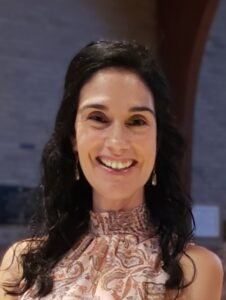 Kimberly Schumacher
I am a licensed clinical social worker who is passionate about working with people and understanding the powerful dynamics between our feelings, thoughts, and behaviors. This… View profile
Kimberly Schumacher
I am a licensed clinical social worker who is passionate about working with people and understanding the powerful dynamics between our feelings, thoughts, and behaviors. This… View profile