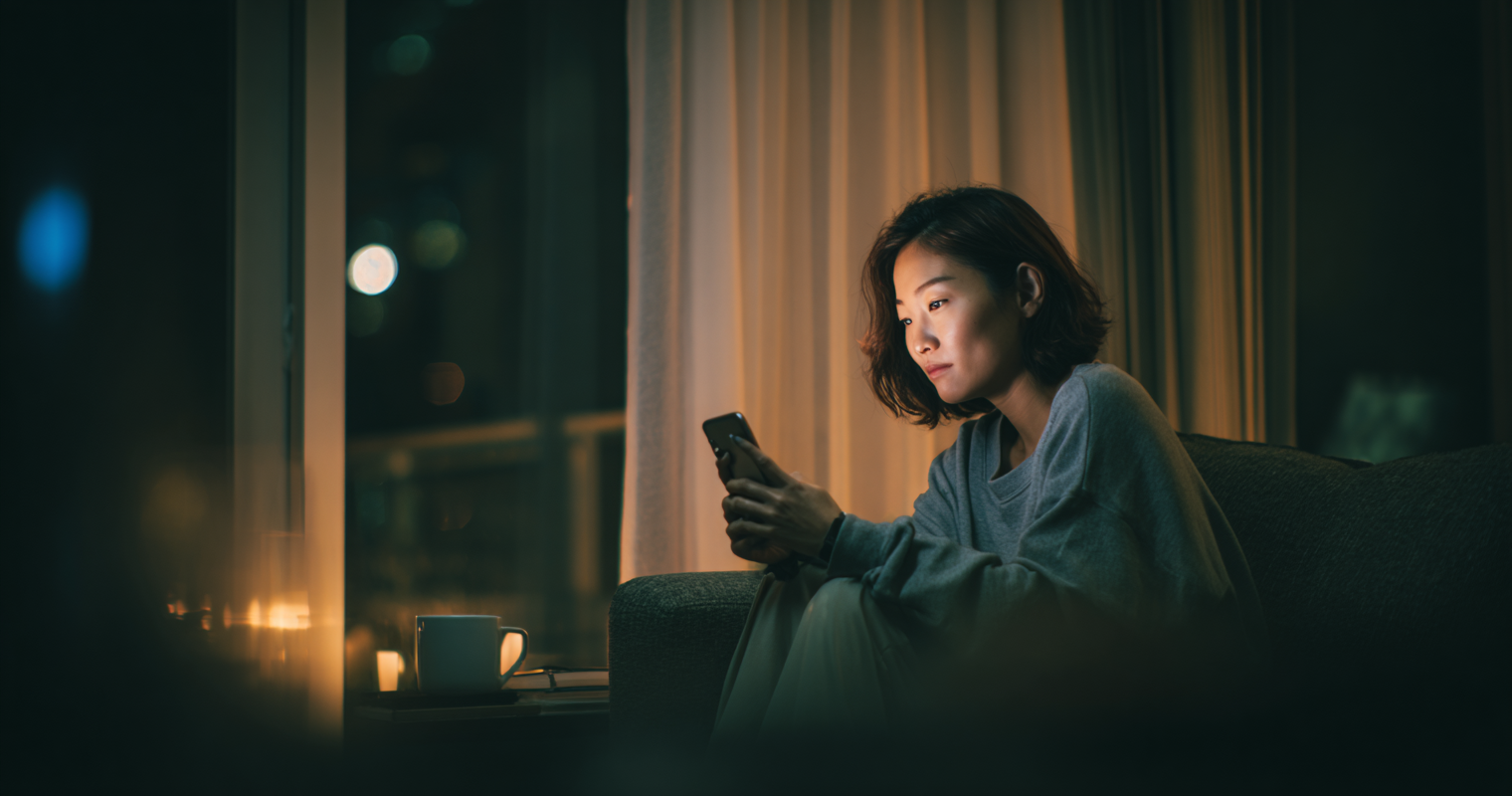
You know that feeling when you’re scrolling through your phone at 2 AM, desperately searching for something—anything—that might help you feel less alone with the weight in your chest? I see you. Sometimes, the most profound healing often begins in the most unexpected places, including that glowing screen in your hand.
Last week, a client told me, “I feel ridiculous for using a mental health app when I should probably just get it together.” Her voice cracked as she said it, and I recognized that particular flavor of shame—the kind that whispers you’re not trying hard enough, not strong enough, not worthy enough of real help. But here’s what I told her, and what I need you to hear: seeking support in any form is an act of courage, not weakness.
The research is catching up to what many of us have suspected for years. Digital mental health interventions—yes, those apps on your phone—are showing remarkable results for people struggling with depression. Not as a replacement for human connection, but as another tool in our healing toolkit. Think of it like this: if therapy is a weekly deep dive into the ocean of your experience, these digital tools are like having a life vest you can reach for between sessions.
I remember when a single mom working two jobs, and the idea of weekly therapy felt impossible. “I can barely find time to shower,” she laughed through tears. We started with traditional sessions, but I also suggested she try an evidence-based app between our meetings. Six months later, she told me that the 3 AM meditation exercises had become her lifeline during those brutal insomnia nights when calling someone wasn’t an option.
What strikes me most about the emerging research isn’t just the numbers—though the data is compelling. It’s how these tools are meeting people exactly where they are. Depression has this cruel way of making everything feel impossibly hard. Getting dressed feels monumental. Making a phone call feels like climbing Everest. But opening an app? That’s something many of us do hundreds of times a day anyway.
The beauty lies in the accessibility. I’ve watched clients use these tools in bathroom stalls at work, in parked cars outside their ex’s house during custody exchanges, in hospital waiting rooms while their parent undergoes chemo. Real life doesn’t pause for our healing, and sometimes we need support that fits into the cracks of our chaotic days.
But let me be clear about something, because I think this matters: digital tools work best when they’re part of a larger tapestry of care. They’re not meant to replace the irreplaceable—the warmth of human connection, the power of being truly seen and heard, the transformation that happens in relationship. Instead, they’re like having a wise friend in your pocket, available at any hour, never judging, always consistent.
I’ve noticed something else in my practice. Clients who use these apps often come to our sessions with more self-awareness. “I tracked my mood all week,” one told me recently, “and I finally see the pattern you’ve been pointing out.” The daily check-ins, the gentle prompts to notice thoughts and feelings—they become a practice of paying attention to yourself with kindness.
There’s also something profound about the privacy these tools offer. I work in a city where everyone knows everyone, and I’ve had countless clients tell me they started with an app because they weren’t ready for anyone to know they were struggling. The anonymity became a bridge to eventually seeking more support. We don’t talk enough about how shame keeps people isolated, and sometimes we need to take that first step in private.
The research shows what I’ve witnessed firsthand: people who engage with quality digital mental health tools see real improvements in their depressive symptoms. Not overnight miracles—healing rarely works that way—but steady, meaningful progress. The kind where you suddenly realize you laughed at something yesterday without forcing it. Where you notice you got through a whole day without that crushing weight on your chest.
What moves me most is how these tools are democratizing access to evidence-based strategies. The breathing exercises, cognitive restructuring techniques, behavioral activation prompts—these aren’t new. But packaging them in an accessible, affordable format means the single parent in rural Pennsylvania and the college student in Philadelphia can access the same quality interventions that were once limited to those with good insurance and flexible schedules.
I think about Marcus, the veteran who told me he’d rather “walk through fire” than sit in a waiting room with other people. The hypervigilance from his PTSD made traditional therapy settings unbearable at first. Starting with a digital program gave him a sense of control and privacy that eventually made him feel safe enough to add in-person sessions. “It’s like I learned the language of therapy before I had to speak it out loud,” he explained.
Here’s what I want you to consider: What if the help you need doesn’t have to look like what you expected? What if healing can happen in your pajamas at 3 AM, during your lunch break, or while you’re waiting for your kids at soccer practice? What if the first step doesn’t have to be as big as you thought?
The intersection of technology and mental health isn’t about replacing the human elements of healing—it’s about expanding our definition of what support can look like. It’s about meeting people where they are, when they need it, in ways that feel manageable and safe.
If you’re reading this and feeling that familiar tug of “maybe I should try something,” listen to that voice. Whether it’s downloading an evidence-based app, calling a therapist, or simply telling one trusted person that you’re struggling—each step counts. Your pain is real, your struggles are valid, and you deserve support in whatever form feels right for you right now.
Healing rarely follows the path we expect. Sometimes it starts with a conversation, sometimes with medication, sometimes with a meditation app at midnight. What matters isn’t how you begin, but that you begin. The research confirms what my heart has always known: there are many roads to healing, and the best one is the one you’re actually willing to walk.
So tonight, if you find yourself scrolling, searching for something to ease the ache, know that reaching for help—even through a screen—is an act of hope. And hope, my dear one, is always the beginning of something better.