

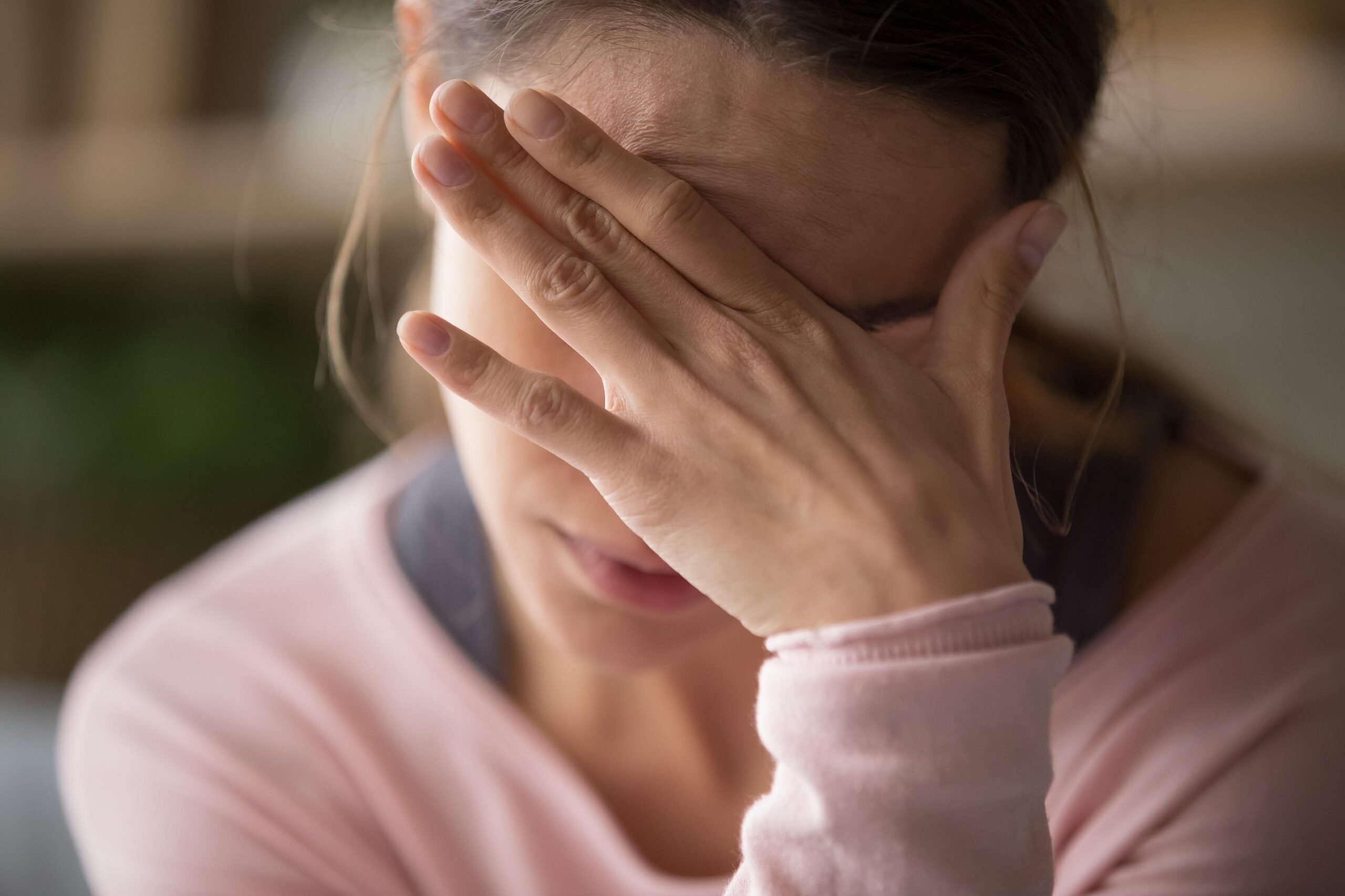
You know that hollow feeling that shows up after any major life change – even the ones you chose? The one nobody talks about because it doesn’t fit the narrative? I see it in my office every week: women who just ended pregnancies sitting with emotions they “shouldn’t” be having, convinced something’s wrong with them because they’re not feeling pure relief.
Here’s what’s actually happening: Your body doesn’t know the difference between an ending you chose and one that chose you. When pregnancy ends – however it ends – your entire system goes through a massive recalibration. Hormones plummet. Your body releases the preparations it was making. And that biological reality doesn’t care about your reasons, your circumstances, or your certainty about your decision.
Most people don’t realize that feeling depressed after abortion isn’t about regret. It’s about biology doing what biology does. Your estrogen and progesterone levels can drop by 90% in a matter of days. That’s the same hormonal cliff that creates postpartum depression after birth. But we only talk about one of these scenarios, leaving countless women wondering why they’re crying in their cars three weeks after a decision they don’t regret.
You can be absolutely certain about your choice and still feel like emotional garbage afterward.
These aren’t contradictions. They’re parallel truths. I’ve sat with women who would make the same decision again in a heartbeat, who are also grieving. Not grieving the pregnancy, necessarily, but grieving the simplicity they expected. Grieving the person they were before they learned their body could betray their mind like this.
Here’s what I’ve noticed after twenty years of these conversations: The women who struggle most are the ones who believe they’re supposed to feel only one thing. They police their own emotions, hunting for signs of regret like detectives at a crime scene. “If I feel sad, does that mean I made the wrong choice? If I feel relief, does that make me a bad person?” The exhaustion of monitoring yourself this closely could create depression all by itself.
What if I told you that your sadness might have nothing to do with the abortion itself? What if it’s actually about the hundred other losses wrapped inside this experience? The loss of innocence about your own body. The relationship that couldn’t weather this storm. The future you’d maybe let yourself imagine for thirty seconds before reality crashed in. The version of yourself who never had to make this choice. The simplicity of believing you’d always know how you’d feel about something this big.
Your body is grieving the biological imperative it was following. That’s not poetry or metaphor – that’s endocrinology. For however many weeks, every system in your body was reorganizing itself around continuing life. Then suddenly, it wasn’t. The same thing happens after miscarriage, after stillbirth, after placing a child for adoption, sometimes even after wanted births. But we only have language and space for some of these experiences.
This isn’t about whether your choice was right or wrong. It’s about understanding that your body keeps its own score, runs its own programs, has its own wisdom that operates independently of your rational mind. You can know with absolute clarity that you made the right decision and still need three months for your hormones to remember who you were before.
Here’s what’s brilliant about feeling depressed after an abortion: It means you’re human. It means your body is working exactly as designed. It means you’re capable of holding complexity – of choosing something and grieving it simultaneously. Most people can’t do that. They need their emotions to line up in neat rows, to make sense, to follow the rules. But you? You’re learning that feelings don’t work like that.
The truth is: There’s no “supposed to” in this experience. I’ve seen women feel nothing but relief. I’ve seen women plunge into depression that lifts like fog after their hormones stabilize. I’ve seen women grieve for years – not the pregnancy, but the innocence they lost in that waiting room. I’ve seen women discover strength they didn’t know existed. All of it is normal. All of it is valid. All of it is physiologically explainable and emotionally complex and deserving of space.
What nobody tells you is that the depression often isn’t about what you think it’s about. You think you’re sad about the abortion. But you’re actually sad about the fight with your mother when you told her. You think you’re grieving the pregnancy. But you’re actually grieving the relationship that ended because he couldn’t handle any of this. You think you’re depressed because you made the wrong choice. But you’re actually depressed because your progesterone is in the basement and you haven’t slept properly in three weeks.
Let’s be honest about this: The narrative around abortion is so polarized that there’s no room for actual human experience. You’re supposed to be either devastated or empowered. Traumatized or liberated. But what if you’re just tired? What if you’re relieved and sad? What if you’re grateful it’s over and angry you had to go through it? What if you feel nothing for three months and then cry in a Target parking lot because you saw a pregnancy test display?
Your feelings aren’t evidence of anything except that you’re processing a major life event while your hormones recalibrate. You’re not broken. You’re not being punished. You’re not secretly regretting anything. You’re just living in a body that takes its biological processes seriously, whether you wanted them or not.
The shift that changes everything is this: Stop asking yourself what your feelings mean and start asking what your body needs. Do you need iron because you bled more than usual? Do you need progesterone support while your levels stabilize? Do you need someone to tell you that feeling like trash for three months after a major hormonal event is completely normal and not a moral judgment from the universe?
You’re exactly where you need to be, even if where you are feels terrible right now. Your body is doing what bodies do. Your emotions are doing what emotions do. And somewhere in this mess of hormones and feelings and cultural narratives that don’t fit your experience, you’re learning something profound: You can trust yourself to handle complexity. You can make difficult decisions and honor their aftermath. You can feel multiple truths at once without any of them canceling each other out.
That’s not confusion. That’s clarity. The kind most people never achieve because they’re too busy trying to feel the “right” thing. But you? You’re learning there’s no right thing. There’s just what is. And what is, right now, is a body recalibrating and a mind trying to make meaning and a human being discovering she’s more resilient and complex than any narrative could contain.
Your depression isn’t a verdict on your choice. It’s your body saying, “Something big just happened here.” Listen to that wisdom. Honor that truth. And know that women in my office every single week are sitting with these same feelings, asking these same questions, discovering these same truths: You can make the right choice and still need time to recover from it. Those aren’t contradictions. That’s just being human.


